
Custom Rubber Grommets
Factory-direct custom rubber grommets — vibration isolation, wire protection, and environmental sealing.
Reliable grommet solutions
for any industry
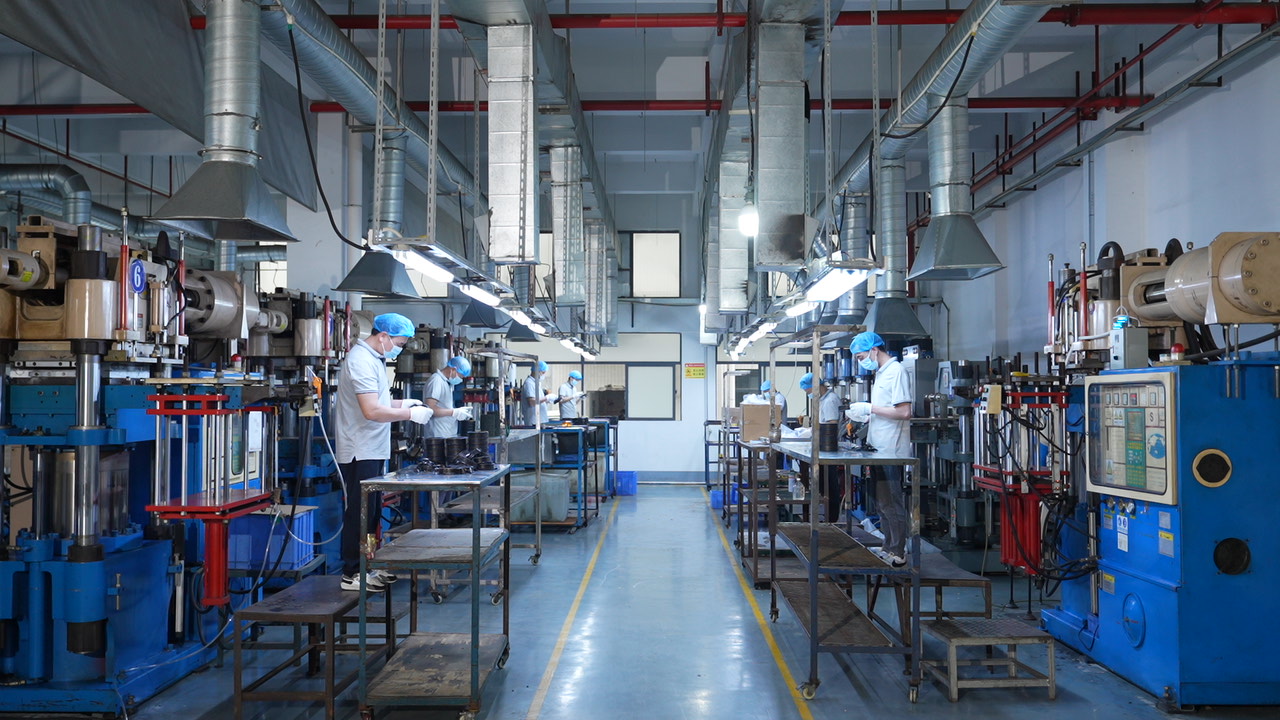
We specialize in manufacturing custom rubber grommets designed for critical vibration isolation, electrical insulation, and abrasion protection. Unlike standard off-the-shelf components, our custom molding process allows for precise modification of groove width, panel thickness, and inner diameters to ensure a perfect seal for your specific assembly. Whether you need blind grommets for environmental sealing or split grommets for retrofitting existing cabling, we can accommodate complex geometries.
Capabilities:
Vibration Isolation: Custom durometers to dampen specific frequencies in automotive and industrial machinery.
Wire Protection: Chamfered edges and smooth finishes to prevent abrasion on wiring harnesses and hoses.
Sealing: Blind and diaphragm grommets designed to block dust, water, and oil ingress (IP-rated designs available).
Technical Specs
Materials:
Hardness Range:
30 Shore A (Soft/Flexible) to 90 Shore A (Rigid).
Tolerances: Capable of meeting RMA A2 Precision molding tolerances.
Size Capabilities: Inner diameters from 0.062″ up to 12.00″.
Grommet Types We Manufacture
Standard rubber grommets fit most applications — but off-the-shelf sizes rarely match your panel thickness, groove width, or inner diameter exactly. We mold grommets to your drawing across four common configurations:
- Open grommets
- Blind / plug grommets
- Split grommets
- Multi-hole grommets
If your application needs a geometry not listed here, send us your drawing. We’ll review it and let you know if it’s moldable as-is or suggest a modification that holds tolerance without adding cost.
Engineered Solutions by Application
Automotive Firewalls Problem
HVAC Compressors Problem
Solar Mounting Systems Problem
If your application isn’t listed, it doesn’t mean we can’t help — it means we haven’t written that page yet. Contact us with your application and we’ll advise on material and geometry.
When a Standard Grommet Fails — Common Field Problems We Solve
Most grommet failures fall into one of three categories. Knowing which one applies to your application determines the right material and geometry before you cut tooling.
- 1. Wrong durometer for the panel thickness A grommet that's too hard won't seat properly — it rocks in the hole and lets in dust and moisture. One that's too soft extrudes under compression and loses its seal over time. We specify durometer (typically 40A–70A Shore A for grommets) based on your panel material, hole tolerance, and whether the grommet sees static or dynamic load.
- 2. Material not matched to operating environment Silicone handles continuous temperatures up to 200°C and resists UV and ozone — right choice for under-hood and outdoor applications. EPDM is the standard for weather sealing and steam exposure but degrades quickly in oil. Neoprene balances weather and oil resistance where neither silicone nor EPDM alone is the answer. Viton / FKM is the right call when you're dealing with aggressive fuels, solvents, or temperatures above 150°C that Nitrile / Buna-N can't handle. If your drawing specifies a material but doesn't call out the operating temperature range or chemical exposure, we'll ask before we quote. A wrong material choice caught at the RFQ stage costs nothing. The same mistake caught after tooling costs everyone.
-
3. Groove geometry not matched to panel Groove width and flange diameter have to match the panel thickness within tight tolerances or the grommet won't retain under vibration. We've seen parts sourced from trading companies that were dimensionally correct on paper but seated loosely in the actual panel — because the factory ran the mold to the drawing nominal without accounting for the buyer's panel stack-up tolerance. We review the full assembly context, not just the part drawing.
Looking for a specific application? See how we approached PTFE grommets for cycle time optimization →
Material Compatibility Guide
| Material | Key Property | Typical Use |
|---|---|---|
| Silicone (VMQ) | Thermal Stability (-60°C to +230°C) | High-Heat Environments, Firewalls |
| EPDM | Extreme UV, Ozone & Weathering Resistance | Outdoor Mounts, Solar, Roofing |
| Neoprene (CR) | Vibration Dampening & Freon Resistance | HVAC Systems, Dynamic Load Bearing |
| NBR (Nitrile) | Aliphatic Hydrocarbon Resistance | Fuel Lines, Oil Splash Zones |
Need help selecting the right material for your application? [Contact our engineering team >]
How We Control Quality Across Every Grommet Run
Our factories are ISO 9001 and IATF 16949 certified — the same standard Tier-1 automotive suppliers are held to. For grommet production specifically, that means:
- Tooling review before cutting steel. We run a DFM check on every new grommet drawing to confirm groove geometry, parting line placement, and draft angles are moldable at the tolerance your drawing calls out. Changes at this stage are free. Changes after tooling are not.
- First Article Inspection (FAI) on every new part. Dimensional report, material certification (COC/COA), and hardness verification before the first production run ships.
- In-process dimensional checks. Flash-free molding requires consistent clamp pressure and mold temperature — we monitor both. Parts that don’t meet the dimensional window don’t ship.
- Documentation available on request. FAI reports, material certs, and PPAP packages for programs that require them.
Need parts that conform to a specific industry standard? Our custom rubber parts program handles insert molding and rubber-to-metal bonding for more complex assemblies where a standalone grommet isn’t enough.
Common Questions About Custom Rubber Grommets
What's the minimum order quantity for a custom grommet?
MOQ varies by part and manufacturing process. For larger molded components, production quantities can start as low as 100 pieces, while smaller parts such as grommets typically start at 500–1,000 pieces.
For custom grommets, most buyers begin with a sample set to verify fit and function in their application before moving into production. Once the sample is approved, tooling typically takes 2–3 weeks, followed by approximately 4–5 weeks for the production run.
How do I specify a custom grommet if I don't have a drawing?
You don’t need a drawing to get started. Tell us what the grommet needs to do — the cable or hose outer diameter it’s protecting, the panel material and thickness it seats into, and the environment it’ll operate in (temperature range, exposure to oil, UV, moisture, etc.). If you have a rough sketch or even just a description of the shape, that’s enough for us to begin. Our engineering team will translate your functional requirements into a CAD drawing, which we’ll share with you for approval before anything goes to tooling. You stay in control of the design without needing to produce the drawing yourself.
Can I get grommets in a specific color or Shore A hardness?
Yes on both. Custom colors are available with no minimum run premium on production quantities. Hardness is specified per drawing — we mold anywhere from 30A to 90A Shore A depending on the application. If you’re not sure what durometer you need, tell us the load conditions and we’ll recommend a starting point.
Grommets that perfectly suit the needs of your product
Fenlora is a trusted name in rubber grommet manufacturing. Work with us to create precision-molded grommets tailored to your product’s performance. Reach out to us today.